
The right basement lighting ideas can turn that dark, forgotten space into your favorite room in the house.
We’re going to walk through 7 lighting strategies that work in real basements, discuss which fixtures make sense and where, and help you brighten the space without turning it into an interrogation room.
Why Basement Lighting Is Different
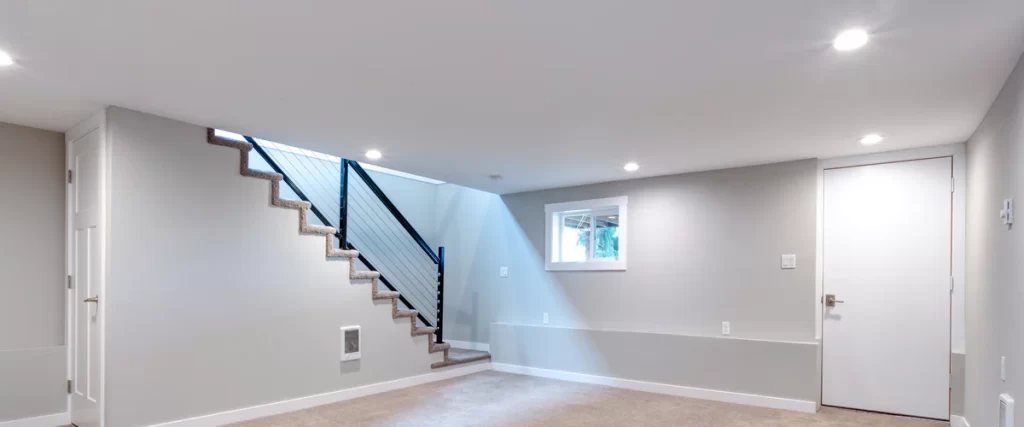
Basements have earned their bad reputation for a reason. Most of them have low ceilings that make overhead fixtures tricky. Many don’t have any natural light at all. The concrete walls don’t exactly reflect light like drywall does, either.
But here’s what makes modern basement lighting exciting: LED technology changed everything. You can now get bright, energy-efficient lighting that doesn’t cost a fortune to run. Smart bulbs let you adjust color temperature and brightness with voice commands.
And if you’re planning a basement remodeling project, you can completely transform how the space feels just by thinking strategically about illumination.
1. Layer Your Lighting (Don’t Rely on One Source)
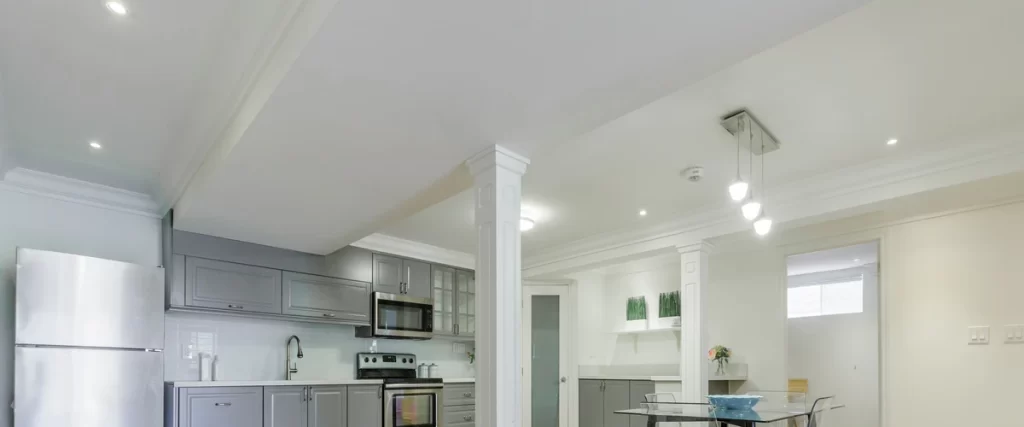
One overhead fixture in the middle of the ceiling shouldn’t be your only source of light. When you mix different light sources at different heights, you eliminate dark corners and create depth:
- Ambient lighting for general illumination
- Task lighting where you need to see clearly
- Accent lighting to add style
Start with recessed lighting as your base layer. Then add wall sconces or pendant lights for specific areas. Finally, add table or floor lamps to reading nooks and seating areas. You’ll see and feel the difference.
2. Recessed Lighting for Low Ceilings
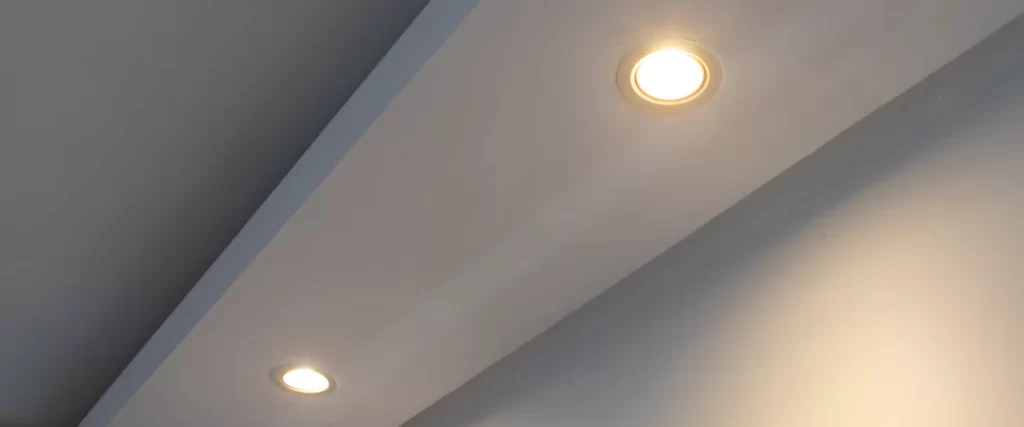
If your basement ceiling sits at 7 feet or lower, recessed lighting is your best friend. These fixtures sit flush with the ceiling, so they don’t make the space feel even more cramped.
Here’s how to plan it out.
You’ll want one light for every 25-30 square feet of space. Space them about 4-6 feet apart in a grid pattern. This gives you even coverage without creating harsh shadows.
Color temperature matters more than you think. Look for bulbs in the 2700K to 3000K range. That warm white keeps your basement from feeling like a hospital.
3. LED Strip Lights Create Amazing Effects
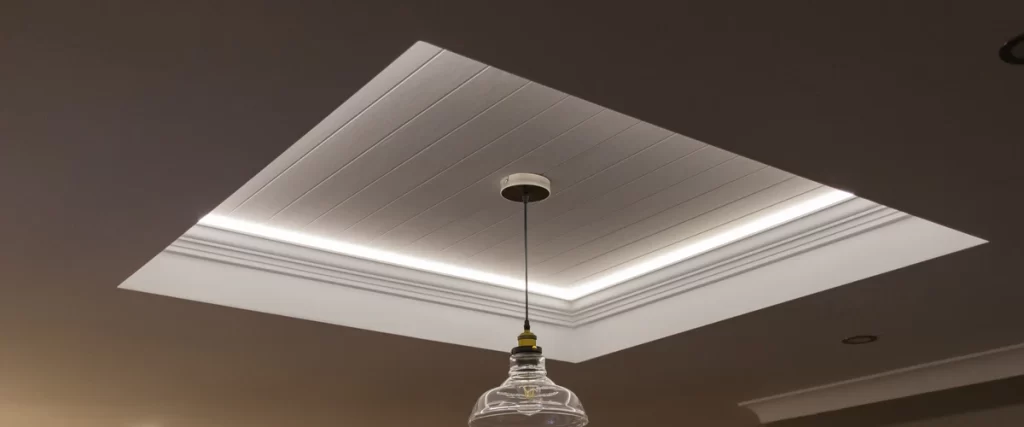
LED strip lights aren’t just for gaming setups. They’re actually incredibly practical for basements. Here are some ideas:
- Install them under the cabinet areas in a basement bar
- Run them along the top of walls for cove lighting that creates a floating effect
- Put them under floating shelves or behind your TV. The indirect light adds warmth without blinding anyone.
The best part? Modern LED strips are energy-efficient, they last forever, and you can control them with your voice assistant. You can create completely different moods just by adjusting the brightness.
4. Track Lighting for Flexibility
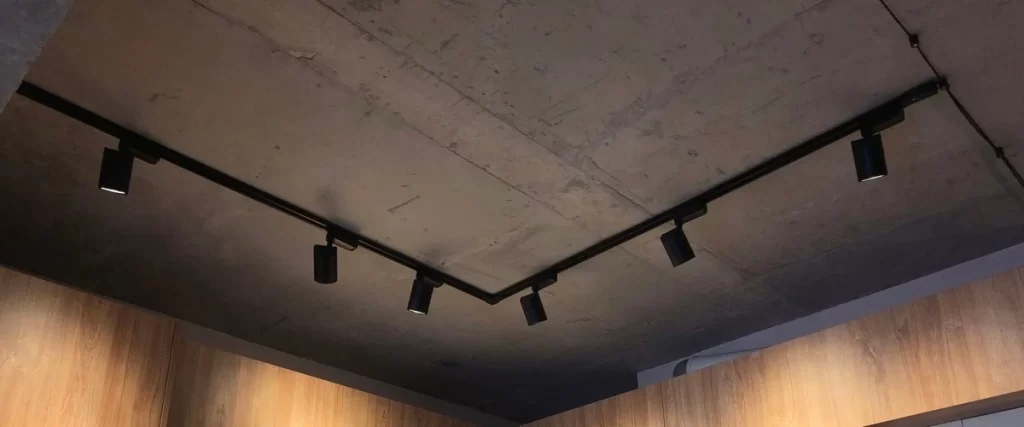
Track lighting is often overlooked, but it addresses a specific need in unfinished basements. You mount one track to the ceiling and can position individual light fixtures anywhere along it.
Need to highlight architectural elements? Point a light there. Want to illuminate a specific seating area? Adjust the angle. Changed your furniture around? Move the lights.
Modern track lighting has come a long way, too. Clean lines, sleek finishes, and the ability to mix different fixture types on the same track. It’s way more versatile than people give it credit for.
5. Smart Lighting That Adapts to Your Needs
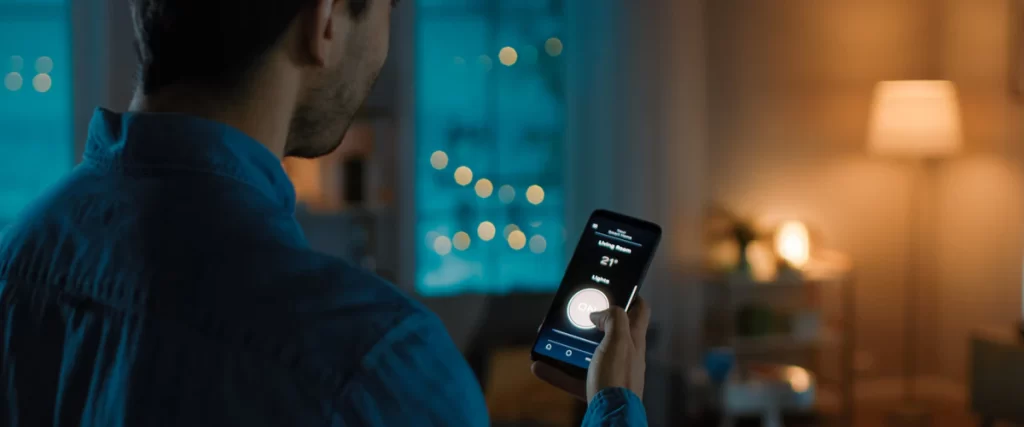
Smart lighting systems let you program different scenes for different activities. Bright white light for folding laundry. Dimmed warm light for watching movies. Task lighting for your home office area during the day.
You can set schedules so your basement is well-lit when you need it and saves energy when you don’t. Voice commands mean you don’t need to fumble for switches in the dark.
The upfront cost is higher than that of basic bulbs. But the energy efficiency pays off over time, especially in a basement where lights might run for hours.
6. Maximize Any Natural Light You Have
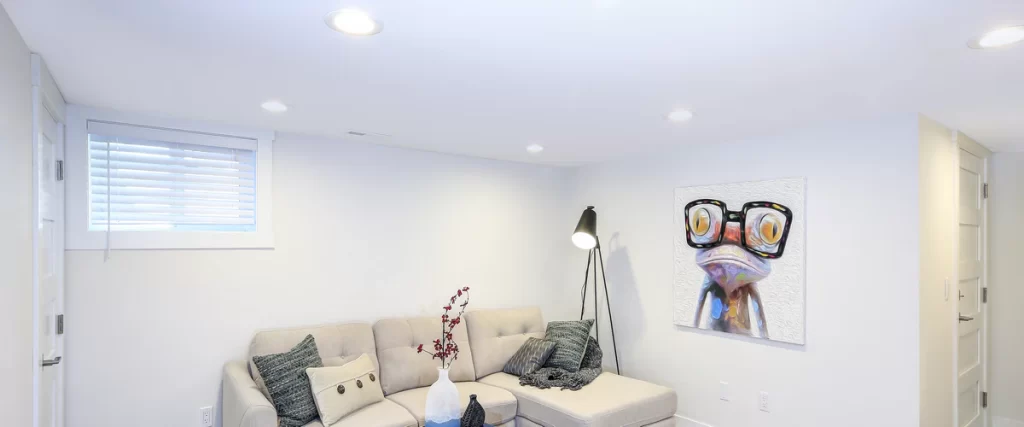
If your basement has even a couple of small windows, make the most of them. Paint walls in light colors that reflect light instead of absorbing it. Keep window treatments minimal, or use sheer curtains that let light through.
Position your brightest task lighting in areas furthest from windows. Save the spots near natural light for activities that don’t require as much illumination. This distributes your light sources instead of clustering them in one area.
For a windowless basement, you can fake natural light with the right fixtures and color temperature. Some LED panels are designed to mimic daylight. They won’t replace actual windows, but they help with that closed-in feeling.
7. Install Dimmer Controls and Create Lighting Zones
Think about how you actually use your basement. Maybe one corner is for watching movies, and another section is a home gym. Each of these needs different brightness levels at different times.
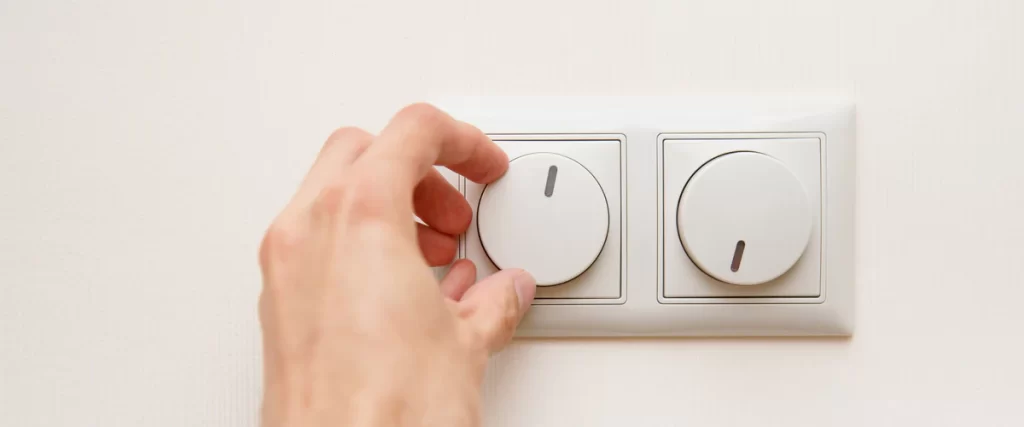
Zone your lighting to control different areas independently. Put the lights around your TV on one switch, the workout area on another, and utility spaces on a third. This way, you’re not lighting up the entire basement when you just need to throw in a load of laundry at 10 PM.
Dimmer switches give you even more control. You can reduce the brightness for movie nights or crank it up when kids are playing. Flexibility matters more than most people realize, and it saves energy because you’re not always running lights at full capacity.
Comparing Common Basement Light Fixtures
| Fixture | Best For | Ceiling Height | Installation Difficulty |
| Recessed Lighting | Overall ambient light | Any (works great for low ceilings) | Moderate |
| LED Strip Lights | Accent and mood lighting | Any | Easy |
| Track Lighting | Flexible task lighting | 8+ feet preferred | Moderate |
| Pendant Lights | Specific areas (bars, tables) | 8+ feet | Easy to Moderate |
| Floor/Table Lamps | Seating areas, reading nooks | Any | Very Easy |
| Wall Sconces | Hallways, flanking features | Any | Moderate |
FAQs About Basement Lighting
How many recessed lights do I need in my basement?
Plan for one recessed light per 25-30 square feet. For a 400 square foot basement, you’d need about 13-16 lights. The exact number depends on your ceiling height, light output of the bulbs, and what activities you’re planning for the space.
What’s the best color temperature for basement lighting?
Stick with 2700K to 3000K for most basement spaces. This warm white feels inviting and comfortable. If you’re using part of the basement as a workspace, you might want 3500K to 4000K in that area to improve focus.
Can I install basement lighting myself, or do I need an electrician?
Simple plug-in fixtures like floor lamps and LED strip lights are DIY-friendly. Any work that requires running new electrical wiring or working with junction boxes should be performed by a licensed electrician. Safety codes exist for good reasons.
How do I light a basement with no windows?
Use a combination of recessed lighting, wall sconces, and lamps. Choose bulbs in the warm white range and consider adding LED strips for indirect lighting that bounces off walls and ceilings. The goal is to eliminate shadows and create diffused light from multiple directions.
What’s the most energy-efficient basement lighting option?
LED lights win by a mile. They use about 75% less energy than incandescent bulbs and last 25 times longer. For optimal energy efficiency, pair LEDs with dimmer switches or smart controls so you’re not running at full brightness all the time.
Let Us Handle Your Basement Lighting Project
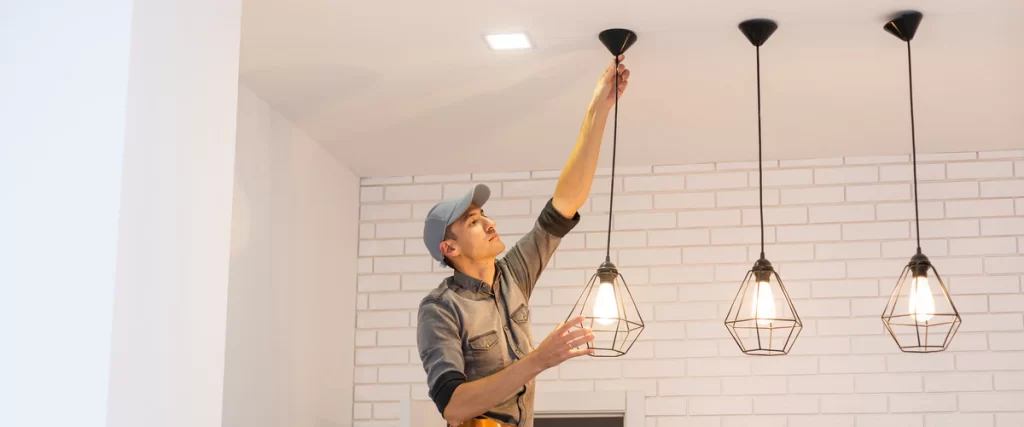
Calculating lumens, spacing recessed lights, choosing color temperatures, and wiring everything safely in your basement is a lot to think about.
If you want basement lighting ideas that actually work, call us at (402) 677-6401 or message us here. We’ll come by to review your space, discuss your plans, and provide a clear view of what it takes to get the lighting right the first time.