
Most homeowners don’t think about shower dimensions until they’re already mid-renovation, and that’s where things get expensive.
The wrong size means ripping out tile, re-framing walls, or worse, a shower that technically passes inspection but feels like a phone booth every morning.
Here’s what this guide covers: the actual code minimums, what “standard” really means in practice, walk-in and corner shower sizes, tub-to-shower conversions, ADA requirements, and a few things most remodeling articles skip right past, like ceiling height and door swing clearance.

What “Standard” Actually Means
The word “standard” gets thrown around loosely. When contractors and manufacturers use it, they’re usually referring to pre-built shower sizes that are widely manufactured and easy to source, not a single universal measurement.
The most common standard shower size in U.S. homes today is 36″ × 36″. It’s the sweet spot: fits most bathroom layouts, works with prefab shower pans and wall kits, and gives the average adult enough room to move without bumping elbows on every wall.
That said, common rectangular sizes like 48″ × 36″ and 60″ × 32″ appear just as often, especially in master bathrooms or where a tub used to sit.
The Minimum Shower Size Allowed by Code
Per IRC Section P2708.1, the minimum interior shower dimension is 30″ × 30″, with a minimum floor area of 900 square inches. This measurement applies to the finished interior space, meaning tile-to-tile, not the rough framing. You can read the full requirements here.
While a 30″ × 30″ shower will pass inspection in most jurisdictions, showering in one is a different story. For daily comfort, most adults need at least 36 inches of interior width.
The National Kitchen & Bath Association (NKBA) recommends 36″ × 36″ as the practical minimum for a shower anyone will actually enjoy using.
Always check with your local building department before planning a layout. Some municipalities have adopted amendments to the IRC that go beyond the national baseline.
Standard Shower Sizes at a Glance
Here’s a quick reference for the most common shower dimensions and where they make sense:
| Size | Type | Best For |
| 30″ × 30″ | Square | Code minimum only, very small bathrooms |
| 32″ × 32″ | Square | Tight guest baths, basement bathrooms |
| 36″ × 36″ | Square | Standard single-user, most common size |
| 48″ × 36″ | Rectangular | Mid-range comfort, primary bathrooms |
| 60″ × 32″ | Rectangular | Tub replacement, narrow layouts |
| 60″ × 36″ | Rectangular | Larger primary baths, aging-in-place |
| 60″ × 48″+ | Walk-in / Open | Luxury, two-person, built-in bench |
These are the finished interior dimensions. Your actual rough opening will be slightly larger once you account for wall thickness and shower wall panels.
Walk-In Shower Dimensions
Walk-in showers are the most requested upgrade in bathroom remodels right now, and for good reason. No glass door to clean, no threshold to step over, and they make a smaller bathroom look more open.
The minimum size for a walk-in shower with a door is 36″ × 36″. If you’re going doorless, plan for at least 42″ of depth, and most designers prefer 48″ to 60″ to prevent water from splashing onto the bathroom floor.
For a two-person shower, you need at least 60″ × 36″ of interior space. That gives each person a standing area without feeling crowded. Add dual shower heads on opposing walls, and you’ve got something that genuinely works for two adults at the same time.
Want a built-in bench? You’ll need to add at least 12 to 18 inches of depth beyond your base width to keep the usable floor space comfortable. A 60″ × 42″ or 60″ × 48″ layout handles this well without the bench eating the whole floor area.
Corner Showers and Compact Bathroom Layouts
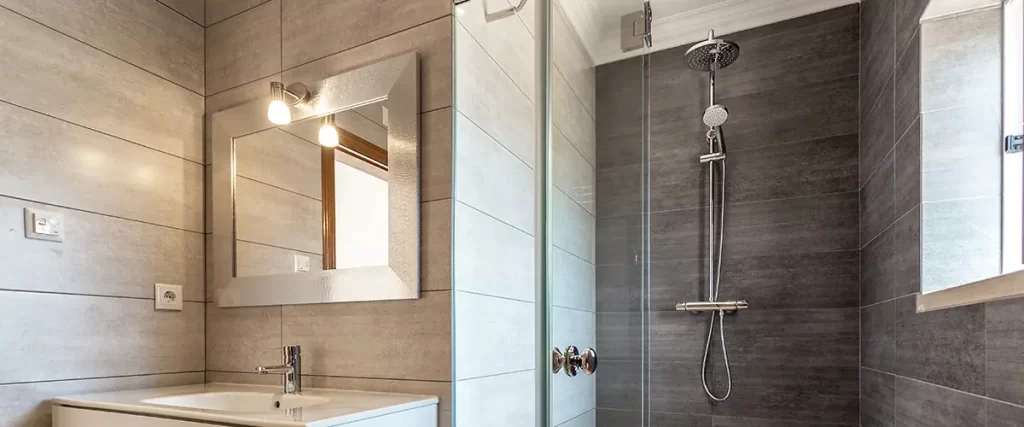
Standard corner shower sizes run from 32″ × 32″ up to 48″ × 36″.
Corner showers are a smart move when bathroom space is tight. They tuck neatly into a corner, leaving more open floor space in the center of the room.
Neo-angle designs, which use a cut diagonal entry instead of a flat front, are popular in small guest bathrooms because the angled entry reduces the door swing footprint.
A few things worth knowing about small-bath shower planning:
- Sliding doors are usually a better call than hinged glass doors when floor space in front of the shower is limited
- Prefab showers come in fixed sizes, so if your available space falls between standard dimensions, a custom tile shower gives you the flexibility to work with what you have
- Built-in niches and recessed shelving don’t eat into the interior floor space, making them great additions to smaller shower enclosures
Tub-to-Shower Conversions
Most standard bathtubs are 60″ long, which is one reason the 60″ × 32″ and 60″ × 36″ shower sizes are so popular.
When you convert a tub to a walk-in shower, you’re often working with the exact same footprint, which keeps plumbing relocation costs down.
The 60″ × 36″ size is the most practical conversion target. It uses the existing drain location, fits standard wall kits and prefab bases, and gives you noticeably more usable floor space than a 60″ × 32″ setup.
Accessible and ADA Shower Sizes
Accessible showers follow stricter guidelines for good reason. The 2010 ADA Standards for Accessible Design (Section 608) specifies:
- Transfer showers: exactly 36″ × 36″ interior
- Roll-in showers: minimum 30″ wide by 60″ deep, with a full open entry on the long side
- A clear floor space of at least 36″ wide by 48″ long adjacent to the shower entry for wheelchair maneuvering
- Grab bars at specified heights and locations
- Threshold height no more than 1/2 inch above the finished floor
If you’re planning aging-in-place upgrades or designing for wheelchair access, a transfer shower that’s even slightly undersized won’t work as intended.
Ceiling Height and Door Clearance
Two things that often get overlooked until it’s too late. Building codes require a minimum ceiling height of 80 inches (6 feet, 8 inches) above the shower area. That’s measured over a 30″ × 30″ section directly in front of the showerhead.
For shower doors, the minimum opening width is 22 inches, per IRC requirements. That’s enough for most adults to enter comfortably, though 24 to 28 inches is more practical for daily use, especially in family bathrooms or for anyone with limited mobility.
FAQ: Standard Shower Sizes
What is the most common standard shower size in homes today?
The 36″ × 36″ square shower is the most widely used size in U.S. residential construction. It works in most bathroom layouts, fits prefab bases and enclosures, and gives most adults comfortable elbow room.
Can I build a shower smaller than 30″ × 30″?
No. The IRC sets 30″ × 30″ as the minimum finished interior dimension, with a minimum area of 900 square inches. Anything smaller won’t pass inspection.
What size walk-in shower do I need for two people?
Plan for at least 60″ × 36″ of interior space. If you want dual shower heads or a built-in bench, a 60″ × 48″ layout works much better.
How much clearance do I need in front of a shower?
The IRC requires at least 24 inches of clear floor space in front of the shower opening. More is always better, especially with hinged glass doors that swing outward.
What shower size works best for a small guest bathroom?
A 32″ × 32″ or 36″ × 36″ corner shower is usually the best call. It keeps the center of the room open and leaves room for the toilet and vanity without the bathroom feeling cramped.
Do I need a permit to change the size of my shower?
In most cases, yes. Any structural change to a shower, including resizing it, typically requires a permit from your local building department. Always verify before starting work.
Choosing the Right Size Is Only Part of the Job
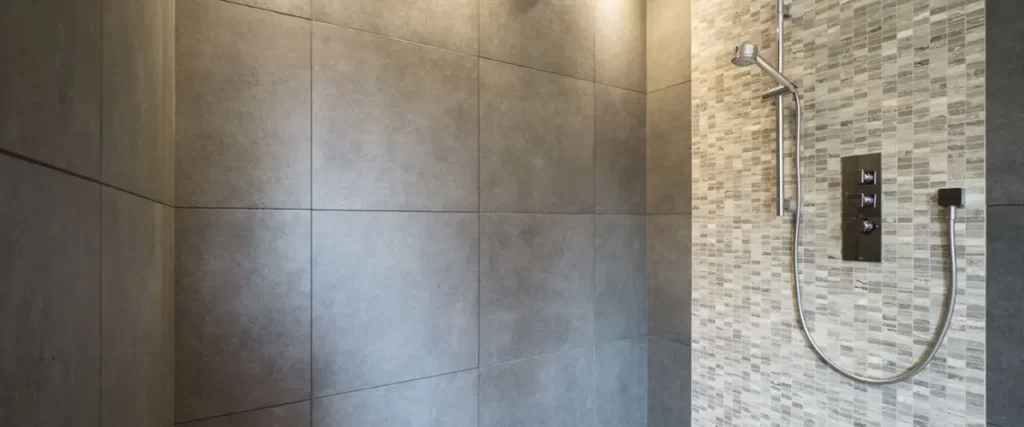
Knowing the right standard shower dimensions is one thing. Getting the framing, waterproofing, plumbing, and tile work done correctly so it actually holds up is another conversation entirely.
If you’re in the Omaha area and thinking through a shower upgrade or full bathroom remodel, it’s a lot easier to hand this off to people who do it every day.
Call us at (402) 677-6401 or message us here, and we’ll take the guesswork out of the whole process.